
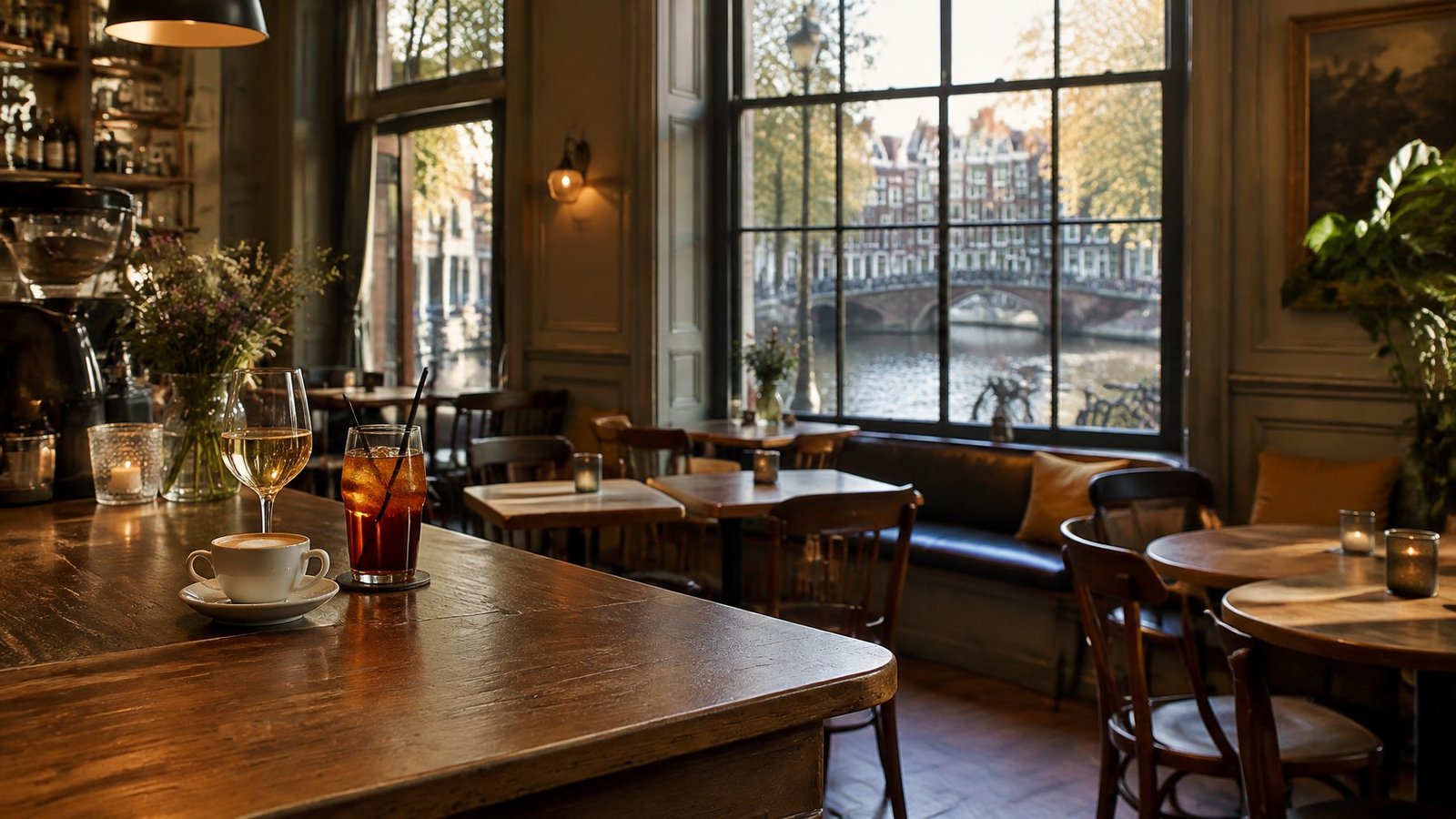
Amsterdam is a city that likes a drink, but not always in the way visitors expect.
The best glass of the day might be a small beer in a wood-panelled cafe at five o’clock, a carefully stirred cocktail after dinner, or a strong coffee and fresh juice at a brunch table on a Sunday morning.
Knowing which kind of place to look for, and when, makes all the difference.
This guide walks through the main types of drinking spots in the city and how to get the most out of each.
Key Takeaways
- Brown cafes are the classic Amsterdam place for beer, jenever and conversation
- The borrel, an informal after-work drink, is the most local way to start an evening
- Cocktail bars have grown into a serious scene, and many reward booking ahead
- Daytime cafes are where Amsterdammers drink coffee, juice and tea with brunch
- Drink at the pace of the locals: slow, social and usually with a small snack
The Brown Cafe: Amsterdam’s Living Room
The bruin cafe, or brown cafe, takes its name from the dark wood and the walls once stained by decades of tobacco smoke.
These are neighbourhood bars where people come to talk rather than to be seen.
Expect a short bar, a few small tables, candles in the evening and a regular or two who seems to have been there forever.
The drinks are simple.
Most people order a pils, a small glass of lager with a generous head of foam, served in a glass that looks modest by international standards.
The small size is deliberate: the beer stays cold, and you order another when you are ready.
Many brown cafes also pour Belgian and Dutch craft beers, and some keep a good shelf of jenever.
Jenever: The Original Dutch Spirit
Jenever is the juniper-flavoured spirit that came before gin.
It comes in two broad styles.
Jonge, or young, jenever is lighter and cleaner.
Oude, or old, jenever has more malt character and is often softer and rounder.
Traditionally it is served in a small tulip-shaped glass filled right to the brim.
The custom is to lean over and take the first sip without lifting the glass, so nothing spills.
Pair it with a beer and you have what the Dutch call a kopstootje, a “little headbutt”.
It is worth trying at least once, ideally in a tasting room or cafe where the staff can explain the differences between bottles.
The Borrel: Drinks With a Bite
If you only learn one Dutch drinking word, make it borrel.
It means an informal drink, usually after work, with colleagues or friends.
A borrel is not about getting drunk.
It is about a couple of rounds, conversation and a plate of snacks to share.
The classic borrel snack is the bitterball, a small crisp-fried ball with a soft, savoury ragout inside, served with mustard.
Cubes of aged Gouda with mustard, sliced sausage and fried snacks are also common.
Ordering a portion for the table is the most natural way to join in.
Cocktail Bars: Amsterdam’s Growing Scene
Over the past decade Amsterdam’s cocktail culture has grown from a handful of hotel bars into a lively scene of small, ambitious venues.
You will find speakeasy-style rooms, bars built around local ingredients, and places that take classic recipes very seriously.
A few tips help you enjoy them:
- Book ahead for weekend evenings, as many of the best bars are small
- Tell the bartender what you usually like; most are happy to make something off the menu
- Try a drink built on jenever or a Dutch liqueur to taste something you will not find at home
- Go earlier in the week if you want time to talk with the bar team
For a shortlist of places to start with, Essentially Amsterdam keeps an up-to-date roundup of the best cocktail bars in Amsterdam, which is a useful starting point when you are planning a night out.
Daytime Drinks: Coffee, Juice and Brunch
Not every good drink in Amsterdam comes with alcohol.
The city has a strong cafe culture, and plenty of locals spend their weekend mornings over coffee, fresh juice and a long brunch.
In the centre, Lagom Amsterdam on Snoekjessteeg is a brunch, breakfast and lunch spot with thousands of Google reviews, which tells you how many people have passed through its doors.
It is a handy stop if you want a relaxed start before exploring the old city.
Further west, Podieum on Abraham Staalmanplein focuses on breakfast, brunch, coffee and cafe service, and it has a very high share of five-star reviews.
It is a good example of the neighbourhood cafes away from the tourist centre where locals actually spend their mornings.
Daytime cafes are also a smart choice if you are pacing yourself.
A coffee or a fresh mint tea, known locally as verse munt thee, is as much a part of Amsterdam drinking culture as a beer.
How to Drink Like a Local
A few habits will help you fit in wherever you go:
- Order at the bar in small places. In many brown cafes there is no table service at busy times.
- Pace yourself. The small glasses are there for a reason.
Rounds are frequent but modest.
- Say proost. That is the Dutch toast.
Make eye contact when you clink glasses.
- Eat something. A borrel without a snack is only half a borrel.
- Cards are common. Many bars prefer card payments, so check before you rely on cash.
- Respect the neighbours. Amsterdam’s bars sit in residential streets, so keep the noise down when you step outside.
Planning a Good Drinking Day
A pleasant day might look like this: brunch and coffee in a neighbourhood cafe, a walk along the canals, an afternoon beer in a brown cafe, a borrel with friends around six, and a cocktail after dinner.
Spreading your drinks across different kinds of places lets you see the city’s full range, and it is far kinder to your head the next morning.
Frequently Asked Questions
What should I order in a brown cafe?
A small glass of draught lager is the classic choice.
If you want something more local, ask about Dutch craft beers or a glass of jenever.
Do I need to book cocktail bars in Amsterdam?
For popular bars on Friday and Saturday evenings, booking is wise.
Early in the week you can often walk in.
Whatever you are drinking, the secret is the same: slow down, find a seat, and let the conversation do the rest.